
Boom, bust or a bit of both: as the jury bides time before ruling on the US 'recession', the economy's vital signs at a perplexing time of high-interest rates, still-punishing inflation, and surprisingly strong economic gains are a study of a growing debate over whether the world's largest economy is barrelling into a new downturn. With the US Federal Reserve's (Fed's) inflation fighters attempting the risky pursuit of 'pillow-soft landings' and its economy sending out mixed signals, if there is indeed a recession, it could spell trouble for domestic equities and corporate earnings growth.

The National Stock Exchange (NSE) has received Rs 300 crore from the Securities and Exchange Board of India (Sebi) following relief from the Supreme Court (SC), which is hearing an appeal by the market regulator in the colocation case. The court on March 20 asked Sebi to return Rs 300 crore to the NSE from the Rs 1,107 crore the exchange had deposited as part of the disgorgement in the case. The NSE had given an undertaking that it will return the entire amount to Sebi if the latter wins its appeal before the SC.

State-owned Life Insurance Corporation of India (LIC), which completes one year of its listing on Tuesday, presents a sorry scorecard as far as its stock market performance goes. Shares of the insurance behemoth are down 40 per cent over their issue price of Rs 949 to Rs 567 apiece. The Sensex, on the other hand, has risen 14 per cent in the past one year.

Thanks to a big payout by the group's cash cow, Tata Consultancy Services (TCS), Tata Sons is set to earn a record-high equity dividend worth nearly Rs 33,350 crore from the group's listed companies for FY23, up 130 per cent from Rs 14,529 crore in FY22. Nearly 90 per cent of this, or around Rs 30,500 crore, is estimated to accrue to Tata Sons while the rest will show up in its profit & loss account for FY24. This is because nearly 80 per cent of the dividend payout by TCS for FY23 was done before the end of the financial year through three quarterly interim instalments and a special one in January this year.

Corporate India continues to be generous in rewarding its shareholders with big dividend payouts. This is especially true for shareholders of companies such as Tata Consultancy Services (TCS), Hindustan Zinc (HZL), and Coal India (CIL) which are seen as cash cows of large business groups and the government. Boosted by a big payout by these three companies, the combined equity dividend payout by listed companies was up 38 per cent year-on-year (YoY) to a record high of Rs 2.27 trillion in 2022-23 (FY23), compared with Rs 1.65 trillion in 2021-22 (FY22).
Vedanta Limited (Vedanta) helping its parent and group holding company Vedanta Resources to deleverage its balance sheet has started to strain its balance sheet. Vedanta's gross debt (consolidated) was up 24.3 per cent year-on-year (YoY) in FY23 and reached a six-year high of Rs 66,628 crore by the end of March. Similarly, its net debt went up 20.3 per cent YoY to Rs 45,706 crore at the end of FY23, up from Rs 38,228 crore a year ago; it was the highest since FY20.

The infighting between the two promoters of Hikal-Baba Kalyani and sister Sugandha Hiremath-has put the company's growth at stake, InGovern has said in a note. The corporate governance firm has called for a change in the management and an overhaul of its board to protect the interest of minority shareholders, who own almost a third of the specialty chemicals company. The Kalyani and Hiremath families are mired in a legal dispute, with the latter seeking transfer of ownership of shares held by the Kalyani group, citing nearly three-decade old family arrangement.

The growing mismatch between Go First's losses and other group companies' profits was making it tough for the group to fund the losses of the airline venture.

With markets getting back their mojo after four months, small- and mid-cap shares raced ahead of large caps in April. The Nifty Smallcap 100 index surged 7.5 per cent - its biggest monthly advance in 10 months - and outperformed the benchmark Nifty 50 index by 350 basis points. The Nifty Midcap 100 index soared 5.9 per cent, most since August.

The Reserve Bank of India's (RBI's) decision on Wednesday to relax restrictions on banks operating in the International Financial Services Centre (IFSC) related to the repatriation of idle funds in foreign currency accounts (FCA) could give a fillip to trading in foreign stocks at the GIFT City.

Actively managed mutual fund (MF) schemes had been at the receiving end over the past few years for their inability to beat their benchmarks. However, the slump in shares of Adani Group companies - two of which are part of the benchmark National Stock Exchange Nifty50 index - have helped them improve their performance vis--vis exchange-traded funds (ETFs) or index funds.

The early bird results for the January-March quarter of 2022-23 (Q4FY23) show a pick-up in earnings growth, despite a slowdown in revenue growth, thanks to a decline in input costs and lower provisioning for bad loans by banks. The combined net profit of 66 companies that have, so far, declared their quarterly results was up 15.2 per cent year-on-year (YoY) in Q4FY23, an improvement from 4.3 per cent YoY growth in Q3. Net sales growth of these companies, however, slowed down to 11.5 per cent YoY in January-March 2023, the slowest rate in eight quarters.

Notwithstanding sharp volatility in March, mutual fund (MF) investors didn't fight shy of investing in riskier small-cap-oriented schemes. Inflows into small-cap funds were not just the highest in absolute terms, they were also the maximum as a proportion of assets under management (AUM) among all market capitalisation (m-cap)-oriented categories. Investors funnelled Rs 2,430 crore down small-cap funds - 1.8 per cent of their AUM of Rs 1.33 trillion.
NSE Indices on Wednesday changed the methodology for handling schemes of demerger involving index constituents. The index provider said a company undergoing demerger would now be retained in its indices. The move comes ahead of the proposed demerger of Reliance Industries' (RIL's) financial services arm. Under the rules prevailing thus far, RIL -- which has the highest weighting among the 50 Nifty components -- would have been required to be removed from the index, resulting in a churn by funds tracking the Nifty index.

The recent sell-off in IT stocks such as Infosys and Tata Consultancy Services (TCS) has resulted in a sharp decline in the IT sector weighting in the Nifty50 index. The sector's weighting in the index has slipped to a five-year low of 12.2 per cent, down from the 17.7 per cent at the end of March 2022. The top IT companies - TCS, Infosys, Wipro, HCL Technologies, and Tech Mahindra - accounted for 13.6 per cent of the index at the end of March this year.
Two listed firms belonging to the Baba Kalyani Group (BNK Group) have contested their inclusion as parties in a suit pertaining to family dispute over ownership of chemical firm Hikal. The co-promoters of the company - Kalyani and Hiremath families - are mired in a legal dispute, with the latter seeking transfer of ownership of shares held by the BNK Group, citing nearly three-decade old family arrangement. An affidavit filed in reply to Hiremath's suit petition in the Bombay high court, BF Investment (BFIL) and Kalyani Investment Company (KICL) have stated that they are separate and distinct legal entities and were not even incorporated and party to the 'family arrangement'.

Brokerages expect India Inc to report an upturn in earnings for the March quarter of 2022-23, after a relatively muted showing in the previous two quarters. This growth is expected to be led by banking, financial services and insurance (BFSI) companies, FMCG firms, and automobile makers. The combined net profit of the Nifty50 companies (excluding Adani Enterprises) is expected to have grown 15.6 per cent to Rs 1.77 trillion in Q4FY23, from Rs 1.53 trillion a year ago.

The country's largest bourse National Stock Exchange (NSE) has put the NSE Prime initiative in cold storage following lukewarm response from India Inc, said people aware of the development. Inspired by Brazil's Novo Mercado, NSE had announced a separate platform which any listed company could be part of by voluntarily adopting a stricter corporate governance code. Launched in December 2021, NSE Prime was to formally take off within a year after empanelling companies.
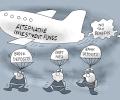
'Given that debt AIFs, by nature, target a higher portfolio return, it is likely to attract investors like HNIs, family offices, etc, looking for a higher yield debt product.'

The third-quarter financials didn't excite market watchers. But equity investors can still make money if they invest in the right stocks.
